Tourists walk through Istanbul every day without realizing they are moving through what was once the beating heart of Eastern Christianity.
In Alexandria, traffic moves past churches older than many modern nations, while the civilization that once made the city one of Christianity’s greatest intellectual capitals survives only in fragments.
In Antakya, the modern city built over ancient Antioch, earthquakes, war, conquest, and time have buried layer upon layer of one of the earliest Christian communities on earth.
Ephesus sits mostly in silence beneath the Turkish sun, its streets filled more with archaeology than worship.
Carthage survives largely as ruins and memory, despite once helping shape Christian theology for the entire Western world.
Most Christians today know Rome and Jerusalem. Some know Bethlehem or Nazareth. But there was once an entire Christian world stretching across North Africa, the Levant, Anatolia, and the Eastern Mediterranean. Its cities produced bishops, theologians, missionaries, monks, councils, manuscripts, hymns, schools, libraries, and debates that helped define Christianity itself.
Many of those cities still exist. But the civilizations that built them do not.
This is not the story of a single invasion or a single century. It is not a simplistic tale of one civilization instantly replacing another. The transformation of Christianity’s great cities happened slowly across generations through conquest, taxation, migration, legal inequality, demographic change, political collapse, war, conversion, assimilation, and time itself.
Some communities survived, some adapted, some shrank into isolated minorities, and some disappeared almost entirely.
And eventually, the bells went quiet.
Antioch: Where Christians Were First Called Christians
Long before the rise of Islamic empires, Antioch stood among the greatest cities of the ancient world. Founded near the end of the fourth century BC by Seleucus I Nicator, one of Alexander of Macedon’s generals, Antioch became a center of Greek culture, commerce, and imperial administration.
By the Roman era, it was one of the empire’s largest cities alongside Rome and Alexandria.
But Antioch’s greatest historical importance came through Christianity.
According to the Book of Acts, it was in Antioch that the followers of Jesus were first called “Christians.”
And when he found him, he brought him to Antioch. So for a whole year Barnabas and Saul met with the church and taught great numbers of people. The disciples were called Christians first at Antioch.
Acts 11:26
The city became one of the earliest and most influential centers of Christian life. Christian tradition associates the Apostle Peter with Antioch before his later ministry in Rome.
Missionary journeys passed through the city. Syriac Christianity flourished there. Theological schools emerged. Bishops from Antioch became major figures in the early Church.
For centuries, Antioch was one of the five great patriarchates of Christianity alongside Rome, Constantinople, Alexandria, and Jerusalem. Its churches shaped doctrine. Its scholars debated theology that still influences Christianity today.
Then history changed direction.
In the seventh century, the expanding Arab Islamic armies defeated Byzantine forces and captured Antioch in 637 AD. The conquest did not erase Christianity overnight.
Christians remained in the city and continued practicing their faith under Islamic rule. However, the political and social structure surrounding Christianity fundamentally changed.
The city passed through centuries of conflict between Byzantine and Islamic powers. It briefly returned to Byzantine control in the tenth century before being captured again.
Crusaders later established the Principality of Antioch, turning the city into a major Crusader stronghold. But in 1268 AD, Mamluk forces captured Antioch permanently.

The Mamluks were a powerful Islamic military ruling class originally formed through slave soldiers, many of whom had been taken from Turkic, Circassian, and other non-Arab populations as children, converted to Islam, and trained for warfare.
The city never truly recovered its former status.
Trade routes shifted. Political power moved elsewhere. Christian demographics declined across centuries. Churches disappeared or were repurposed. Communities emigrated or assimilated. Repeated wars, massacres, earthquakes, and instability accelerated the collapse of what had once been one of Christianity’s defining cities.
Modern Antakya still contains Christian minorities, ancient churches, and traces of its extraordinary past. But the scale is almost impossible to compare.
A city that once helped define Christianity for the world became a remnant of the religious world it once represented.
Today, many visitors know Antioch more through archaeology than living Christian civilization.
Alexandria: The Intellectual Giant of Early Christianity
If Antioch was one of Christianity’s earliest missionary centers, Alexandria became one of its intellectual capitals.
Founded by Alexander of Macedon in 331 BC, Alexandria grew into one of the Mediterranean world’s greatest cities. It was famous for its library, scholarship, philosophy, and multicultural population.
Greek, Egyptian, Jewish, and Roman influences collided there long before Christianity emerged. When Christianity spread into Egypt, Alexandria became one of its strongest centers of learning.
The Catechetical School of Alexandria produced major Christian thinkers such as Clement of Alexandria and Origen. Athanasius of Alexandria became one of the most influential defenders of Trinitarian Christianity during the Arian controversy.
Egyptian monasticism emerged from the deserts surrounding the city and transformed Christian spirituality forever. The desert fathers, ascetics, monasteries, and theological writings born in Egypt spread across Christendom.
For centuries, Alexandria was not peripheral to Christianity. It was central to it.
Then came the Islamic conquest of Egypt in the seventh century.
In 641 AD, Arab Muslim armies captured Alexandria after defeating Byzantine forces. Like Antioch, the city did not immediately cease being Christian. Egypt remained heavily Christian for generations after the conquest, particularly among the Coptic population.
But the long-term transformation had begun.
Arabic gradually replaced Greek and Coptic as the dominant administrative and cultural languages. Christians became dhimmis under Islamic rule, allowed to practice their religion while subjected to restrictions and special taxation through the jizya system.
Over generations, social and economic pressures encouraged conversion and assimilation.
Some periods were relatively stable. Others were marked by harsher restrictions, the destruction of churches, persecution, or political instability. The Christian population diminished over generations while Islamic identity became dominant across Egypt.
This shift was not merely religious. It reshaped language, architecture, administration, education, and cultural identity.
Modern Alexandria still contains churches and significant Christian history, and Egypt’s Coptic Christians remain one of the oldest surviving Christian communities on earth.
Yet the city that once helped shape Christian theology for the entire Mediterranean world no longer functions as a center of Christian civilization.
Constantinople: The City That Outlived Its Civilization
No city symbolizes the transformation of Christianity’s ancient world more than Constantinople.
Founded by Emperor Constantine in the fourth century as the new capital of the Roman Empire, Constantinople became the center of Eastern Christianity for over a thousand years.
The city stood at the crossroads of Europe and Asia, protected by immense walls and enriched by trade, imperial wealth, and religious prestige.
Its churches dominated the skyline. Its emperors influenced Christian doctrine. Its councils shaped theology. Pilgrims, monks, scholars, and merchants flowed through its streets from every corner of Christendom.
And at the center stood Hagia Sophia.

For nearly a thousand years, Hagia Sophia was one of the greatest churches in the world. Its massive dome symbolized imperial Christianity itself. Generations worshiped beneath its mosaics and chandeliers while Byzantine liturgy echoed through the structure.
Then came 1453.
When Sultan Mehmed II captured Constantinople, the Byzantine Empire effectively ended. Hagia Sophia was converted into a mosque. Crosses gave way to minarets. Eastern imperial Christianity lost its political capital.

But the remaking of Constantinople into Istanbul was not completed in a single day.
Greek Christian communities remained for centuries under Ottoman rule. Churches survived. Patriarchates continued operating. Christian merchants and neighborhoods still existed across the city. Yet the balance of power had permanently shifted.
Over time, demographic changes accelerated. Islamic institutions expanded. Turkish identity replaced Byzantine identity. Christian populations steadily declined through migration, pressure, nationalist conflict, massacres, population exchanges, and twentieth-century expulsions.
The Greek population that once formed a major part of the city nearly vanished.
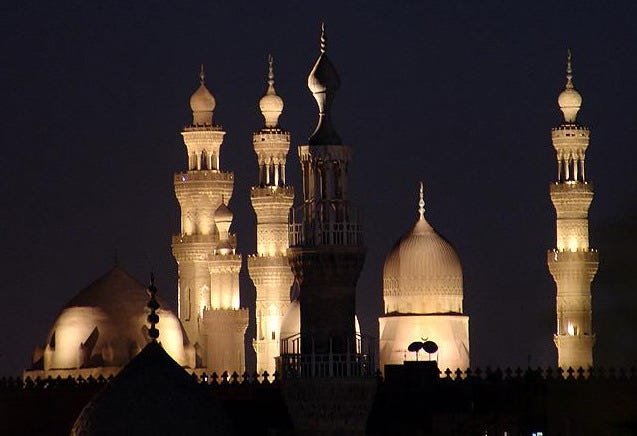
Today, Istanbul remains one of the world’s great cities. Millions walk its streets every day. Hagia Sophia still stands, no longer as the cathedral that once symbolized Eastern Christianity, but as a mosque beneath Ottoman minarets. Byzantine walls still rise over sections of the city. Some ancient churches survive in altered form, hidden pockets, or historical remnants of the Christian world that once defined Constantinople.
But the civilization that brought the message of Christ to Constantinople no longer exists.
Ephesus: The Church That Became Ruins
Unlike Constantinople or Alexandria, Ephesus does not confront the modern world as a living metropolis.
It confronts it with silence.
Located on the western coast of Anatolia, Ephesus was once one of the great cities of the Roman world. It was wealthy, cosmopolitan, and strategically important.
The Apostle Paul preached there.
Early Christian communities flourished there. The city became associated with some of Christianity’s earliest theological struggles and missionary activity.
The Book of Revelation addressed the Church of Ephesus directly.
To the angel of the church in Ephesus write:
These are the words of him who holds the seven stars in his right hand and walks among the seven golden lampstands. I know your deeds, your hard work and your perseverance. I know that you cannot tolerate wicked people, that you have tested those who claim to be apostles but are not, and have found them false. You have persevered and have endured hardships for my name, and have not grown weary.
Yet I hold this against you: You have forsaken the love you had at first. Consider how far you have fallen! Repent and do the things you did at first. If you do not repent, I will come to you and remove your lampstand from its place. But you have this in your favor: You hate the practices of the Nicolaitans, which I also hate.
Whoever has ears, let them hear what the Spirit says to the churches. To the one who is victorious, I will give the right to eat from the tree of life, which is in the paradise of God.
Revelation 2:1-7
Christian tradition also connected the region to the Apostle John and to traditions surrounding Mary.
For centuries, Ephesus mattered deeply within Christian memory. But geography and history slowly abandoned it.

Its harbor gradually silted up, weakening trade and economic power. Invasions, political instability, earthquakes, and changing trade routes accelerated decline.
Islamic conquest reshaped the wider region over time, while the city itself diminished economically and demographically long before the Ottoman period fully arrived.
Eventually, Ephesus ceased functioning as a major urban center altogether. What remains today are ruins: columns, stone roads, fragments of churches, and broken arches weathered beneath the Anatolian sun.

Tourists walk through the remains of a city that once carried enormous spiritual significance across Christianity. Yet there is something uniquely haunting about Ephesus because almost nothing replaced it. It did not transform into another major Christian capital or Islamic metropolis.
It simply faded.
Carthage: The Christian World That North Africa Lost
Modern conversations about Christianity often focus heavily on Europe when discussing the faith’s greatest intellectual and theological centers.
But long before much of Northern Europe became Christian, North Africa was already helping shape Christian theology for the wider world.
And Carthage stood near the center of that world.
Located in present day Tunisia, Carthage became one of the Roman Empire’s most important cities after the Punic Wars. Christianity spread rapidly across Roman North Africa, producing influential theologians such as Tertullian, Cyprian, and Augustine of Hippo.
The region was filled with churches, monasteries, bishops, and Christian scholarship. Latin Christianity flourished there centuries before many parts of Europe fully converted.
Then the political structure holding Roman North Africa together collapsed.
Vandal invasions weakened the region during the fifth century. Byzantine reconquest restored some imperial control, but the old order never fully recovered. In the seventh century, Islamic armies expanded across North Africa, defeating Byzantine resistance and gradually transforming the region politically, culturally, and religiously.
Again, the process was not instant.
Christian communities survived for generations after conquest. But over centuries, Latin Christianity declined dramatically. Arabic language and Islamic culture became dominant. Economic and political incentives favored integration into the new order. Christian institutions weakened. Churches disappeared. Communities fragmented.
Eventually, one of Christianity’s great intellectual heartlands nearly vanished from the region entirely.
Today, the ruins of Carthage stand near Tunis as reminders of civilizations layered atop one another. Most visitors associate the city with Hannibal and Rome, not with Christianity.
The transformation of these cities did not happen in exactly the same way, but they ultimately arrived at the same destination: they fell under Islamic conquest and Islamic political control, and over centuries their Christian character diminished, fractured, or disappeared almost entirely.
But nearly all of them shared one common reality: Christianity receded while Islamic power expanded.
And perhaps the most important part of that history is what happened afterward.
Again and again, Christians adapted to the loss by moving elsewhere. New Christian centers emerged while the old ones faded. The frontier shifted. The churches emptied. The populations changed. The inherited order changed character.
Over time, cities that once helped define Christianity itself became Islamic capitals, archaeological ruins, tourist destinations, or small surviving minorities surrounded by entirely different civilizational identities.
That pattern is not ancient history alone.
Many Christians today walk through these cities without realizing they once stood at the center of Christian civilization. The streets that once carried Christian processions, liturgy, baptisms, funerals, and worship now preserve little more than echoes of that world.
And that lack of historical knowledge is why today, Islamic influence is expanding rapidly through demographic growth, migration, political organization, institutional influence, and cultural pressure in many Western cities and regions, while much of Western Christianity responds with the same assumptions that once existed in Antioch, Alexandria, Constantinople, and Carthage: that coexistence alone will preserve the cultural foundation underneath it.
And once again, many Christians are repeating the same history: Some retreat inward. Some relocate to other neighborhoods, cities, or states hoping to preserve fragments of the life they once knew. Others convince themselves that the transformation around them is temporary, manageable, or even imaginary until the cultural balance has already shifted beyond recognition.
History has seen this pattern before.
That is why understanding long historical patterns matters. And it is why I wrote The Architecture of Jihad: to document, in concrete and historical terms, how Islamic doctrine, Sharia, demographic expansion, migration patterns, political influence, parallel legal structures, financial systems, and cultural pressure have repeatedly transformed societies across history.
Not only through open conquest, but through slow civilizational replacement met, again and again, by populations that underestimated the threat, avoided confrontation, surrendered cultural confidence, or simply moved elsewhere while the inherited society around them gradually became something else.