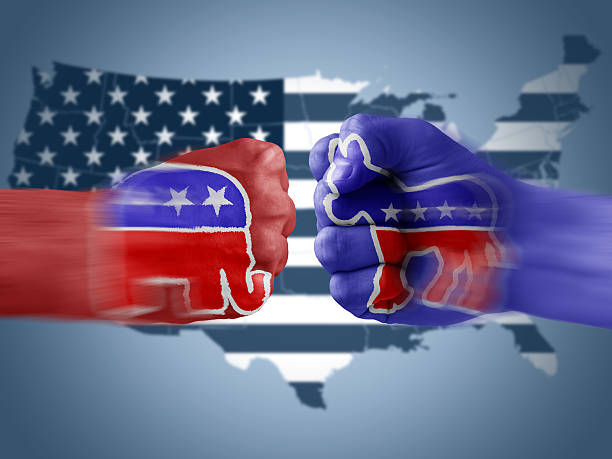
Without a thorough post-mortem, Democrats are left without any information about what might work in 2028
After weeks of stalling, Democratic National Committee Chair Ken Martin finally released the long-awaited campaign autopsy to nearly universal bad reviews.
What the DNC needed was a candid after-action report.
What they got was an extraordinarily incomplete post-mortem that fails to get to the heart of what worked, what didn’t, and why.
The party is left without the kind of “lessons learned” that a thorough after-action report is expected to deliver, fact-based knowledge that can improve performance the next time around.
While after-action reports are usually done in the aftermath of a negative outcome, they are extremely useful after a major success as well.
Winning candidates, political leaders, and party conferences tend to be at their blindest the morning after an election when, in their minds, everything worked perfectly, and they just need to do it again.
In 2016, Republicans won the trifecta, and then lost the House in 2018. In 2020, Democrats won the trifecta, only to lose the House in 2022. Running the last playbook is usually a bad idea in elections, but we can learn from past elections — both winners and losers.
Over the years, I’ve done many after-action reports, including for Speaker Newt Gingrich as his director of planning in the late 90s.
Central to these were two elements — a detailed timeline to review the sequence of events impacting the outcome and an analysis of their interrelationships.
It was also important to sequence key decisions made before or after critical events to understand how decisions were made before an event and how they were reacted to afterward, along with the parameters and options available.
This kind of in-depth analysis seemed in short supply in the DNC report, and though it acknowledged the value of developing lessons learned, its lack of a conclusion revealed the weakness of the overall document, which left too many crucial questions unanswered.
Here are six questions the DNC should have addressed, encompassing both politics and policy.
1. Did Harris Lose Because She Had Only 107 Days to Campaign?
When Joe Biden dropped out on July 21, the RealClearPolitics daily average had him trailing Trump by 3.1 percent. On Aug. 5, Harris took the lead over Trump and held it through October 25. Trump regained the lead on Oct. 26, but Harris regained it on Nov. 4, with a 0.1 percent margin.
According to RCP, Harris led in 83 of the 107 days of the campaign.
She clearly had the time, so the obvious question is: how did she lose the consistent lead she held through most of her campaign?
2. What Was The Role Of Inflation In The Harris Campaign?
The key issue for voters in the election was inflation. In the DNC autopsy, inflation was only mentioned in the context of comparing campaign fundraising across different years, adjusting for inflation. But as a stand-alone issue affecting voters, it was never mentioned — the most glaring omission.
In the “Winning The Issues” post-election survey, the top two issues voters heard from Democrats were abortion and the “threat to democracy.” In the Edison exit polls, voters trusted Harris over Trump by a 49-46 margin to handle abortion, and those voters who thought democracy was threatened (73 percent) voted for Trump 50-48.
So, why did the campaign fail to focus more on the economy given Harris’ role in the Biden administration? What underpinned the voter results dealing with abortion and democracy? Did the campaign believe they could minimize the negative impact of inflation by substituting abortion and democracy?
3. Why did Democratic Senate candidates in Michigan, Wisconsin, Arizona, and Nevada win while Harris lost?
The questions here are straightforward. What were the key differences between Harris’ campaigns in those states and the Senate campaigns?
In the three closest states (Wisconsin, Michigan, and Pennsylvania), the margin was under 2 percent with 44 electoral votes at stake, enough for Harris to have won. Biden won them in 2020. Why didn’t she?
4. Why Did Harris Lose Ground With Key Major Voter Groups (Independents, Women, And Hispanics)?
Why did the margin for independents (who were 34 percent of the presidential electorate) go from +13 for Biden to +3 for Harris? Why did women (53 percent) go from +15 for Biden to +8 for Harris, particularly given the emphasis on abortion? Why did Hispanics (11 percent) go from +33 for Biden to +5 for Harris?
5. Why did the lowest percentage of the presidential electorate in the history of exit polling (1972 forward) identify as Democrats in the 2024 election?
The questions here are: why did Democrats, as a percentage of the presidential electorate, go from 37 percent in 2020 to 31 percent in 2024, representing about 10 million fewer Democrats? Why did Democrats come in behind independents as a percentage of the presidential electorate? (The first time a major political party finished behind independents since the Watergate era.)
Why did Democrats fall behind independents to third place in party ID in Arizona, Michigan, Nevada, North Carolina and Wisconsin?
6. Did the presidential candidates’ images impact the race?
According to exit polls, there was virtually no difference between the two candidates in terms of image. Trump’s favorable-unfavorable was 46-53, while Harris was at 46-52. In 2020, Biden was at 52-46. The questions here are: why was Harris’ favorable-unfavorable worse than Biden’s in 2020? How did similar favorable-unfavorables produce a 1.47 percent margin for Trump?
Interestingly, the one question that doesn’t need answering is whether Harris had enough resources for her campaign, coming in at more than a billion dollars.
Despite the widespread criticism of the autopsy, the usual response from Democrats continues to be, “We know what happened; Biden didn’t drop out soon enough, giving her too short of a time to run a campaign, and of course the economic situation….”
That is a theory without depth or understanding, and the DNC autopsy has added little clarity for the party. Neither time nor money was the problem for the Harris campaign, which suggests the DNC report should have focused more on strategies and decision-making.
Without a comprehensive after-action report, without understanding why they lost, Democrats are less able to make critical strategic adjustments for both the ‘26 and ‘28 elections.
Too many questions. Not enough answers.