In my detective days in the South Bronx nearly two decades ago, you had to go to the Complaint Room to write up an arrest with an assistant district attorney, ordinarily with the victim in tow. It was a high-volume operation in a low-rent venue, a wide expanse of cubicles and industrial carpet, with lots of familiar faces among the cops and prosecutors. One night, I ran into someone I didn’t expect to see: my cousin Brian, a New York City firefighter.
“What the hell are you doing here?” I asked him. Brian’s engine company had gone out on a routine medical run at an apartment building, followed by an ambulance. One of the residents decided that the vehicle exhaust posed both a health hazard and a personal affront, and he decided to try to smash the fire truck’s window. Brian caught him, and a scuffle ensued. The perp was cuffed, hauled off by cops, and arrested for assault in the second degree, a felony punishable by up to seven years in prison.
Some cases are complicated, factually messy, or legally tricky. This wasn’t one of them. Assault 2 covers attacks on firefighters and other public servants that prevent them from doing their jobs. It didn’t matter. The prosecutor decided to downgrade the charge to misdemeanor assault. I was told that Brian’s injuries—a few cuts and bruises—weren’t really serious. The plain language of the law didn’t matter.
Brian was less bothered by the outcome than I was. He knew that his assailant was drunk, and believed that he was mentally ill, too. Additional downgrades would be negotiated after the man’s arraignment, and cases that arrive in court as misdemeanors are often disposed of as noncriminal violations such as disorderly conduct and then sealed. By pleading guilty to “dis-con,” the man could truthfully say he hadn’t been convicted of a crime. After maybe a year, no record of the incident would exist. As far as Brian recalls, that’s exactly what happened.
I thought of my cousin when the New York City Police Department (NYPD) announced the city’s latest quarterly crime statistics earlier this month. The numbers showed mostly good news. In the first nine months of 2026, murders and shootings fell to record lows. Rape increased slightly, because of cases that were reported more than a year after the alleged crimes and changes in state law that expanded the definition of rape to include other sex crimes. Robbery, burglary, grand larceny, and auto theft all declined, and major crimes overall fell 6.6 percent, the steepest decline in 17 years, the NYPD said.
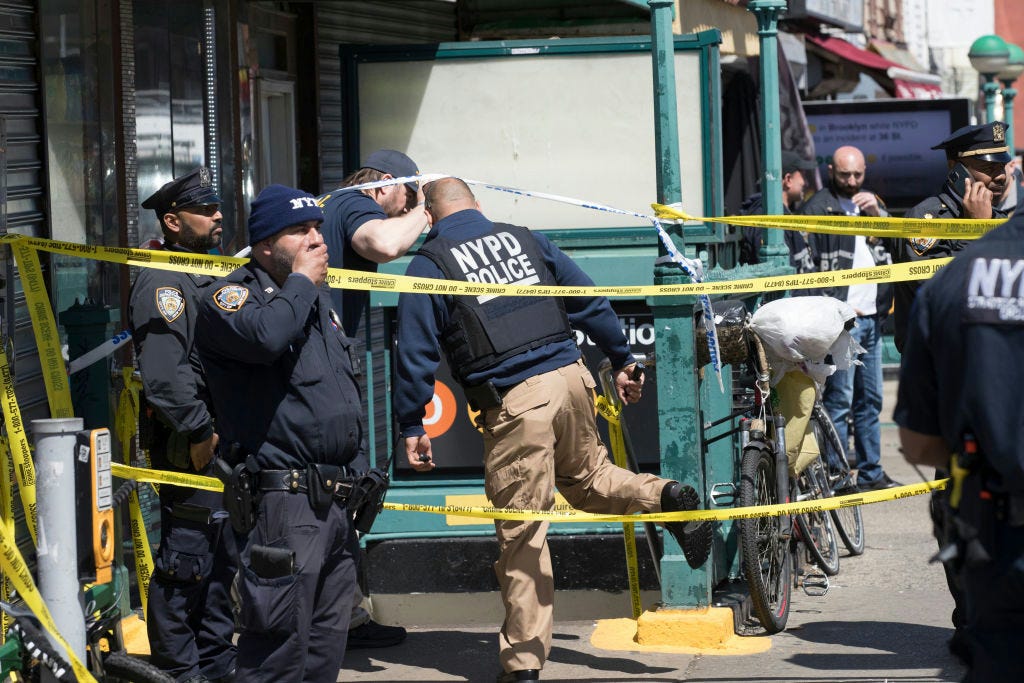
But there was one category where the numbers went in the wrong direction: felony assault. That’s the same type of major crime that Brian’s perp was arrested for nearly two decades ago. Through September of this year, the number of felony assaults in New York City rose 0.2 percent compared with a year earlier, including a 7.7 percent jump in attacks on police officers and other public service workers.
In 2025, the number of felony assaults was 45 percent higher than in 2020, while the number of murders fell 34 percent, according to crime data compiled by Vital City, an urban think tank in New York City. There were nearly twice as many felony assaults in 2025 as there were in 2008.
Violence often seems to come out of nowhere in the city. Bar fights, road rage, and explosive freakouts on the subway (which also have risen despite a 25 percent decline in ridership) can begin with stepped-on new shoes, bumps, or a dirty look. One of the first murders I worked on began as a spat between two men over who was supposed to return a rented videotape (Bait, starring Jamie Foxx).
In 2011, one in every three people arrested for one of the seven major felonies in New York City was sentenced to probation, jail, or prison. Five years later, it was just one in five—and even fewer in the Bronx and Brooklyn. In 2010, 38.5 percent of people arrested for violent felonies were offered plea bargains to a misdemeanor or lower offense. And in 2010, the average person who was arrested had three previous felony arrests. In 2016, it was four previous arrests.
Then 2020 hit. Bail reform meant few arrested people could be detained. Discovery reform meant thousands of cases were dismissed because prosecutors couldn’t meet the new law’s strict document-production deadlines. And because dismissed cases are sealed, many people who were arrested over and over looked like first-time offenders, at least on paper, when brought before a judge. Nearly 30 years of steady, often spectacular improvements in public safety were reversed. The consequences were immediately visible in every category of major violent crime and in the proliferation of plexiglass in drugstores.
Crime began to go down again under Eric Adams, the former NYPD captain and longtime critic of the department who was elected mayor in 2021 on an old-school crime-fighting platform. That he was black blunted the criticism that policing itself was racist. The state legislature rolled back some of the worst excesses of bail and discovery reform, including that someone charged with jumping bail could not be held on bail.
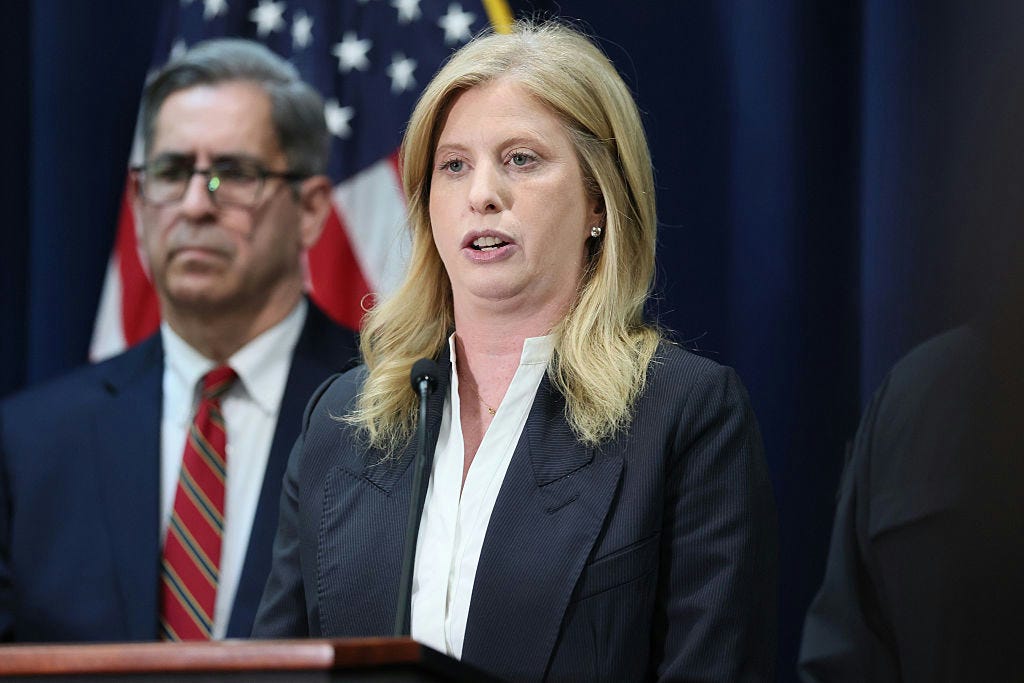
The unavoidable reality of the violence and disorder has forced many critics of policing and criminal justice in New York City to disavow their past positions, or at least soften them. In 2020, during Zohran Mamdani’s campaign for the New York state legislature, he advocated “defunding” the NYPD, which he denounced as “racist,” “violent,” and “anti-queer.” Now that Mamdani is mayor, he has stood by police commissioner Jessica Tisch, even as she ramped up enforcement of quality-of-life offenses, much to the distress of some of his far-left allies.
Manhattan district attorney Alvin Bragg abandoned the pledge he made before his election in 2021, later formalized as the “Day 1 Memo,” that his office of prosecutors would pursue incarceration only for crimes such as rape and murder. He also declared that he wouldn’t pursue prison time for gun possession or robberies in which no one was hurt. Many misdemeanors—such as trespassing, turnstile jumping, and resisting arrest for a noncriminal offense—wouldn’t be prosecuted “under any circumstances,” according to the memo. His position amounted to a get-out-of-jail-free card for any man who beat a woman, no matter how badly, as long as he didn’t kill her.
It took only a few bad headlines after Bragg was sworn in for him to start backpedaling. One man accused of robbing the same Duane Reade store twice in one day had his felony charges reduced to misdemeanors, despite a 30-year rap sheet that included two prison sentences. First, Bragg told prosecutors to use their best judgment. Then, he announced that gun possession would be prosecuted as a felony, along with commercial robberies in which any weapon was used.
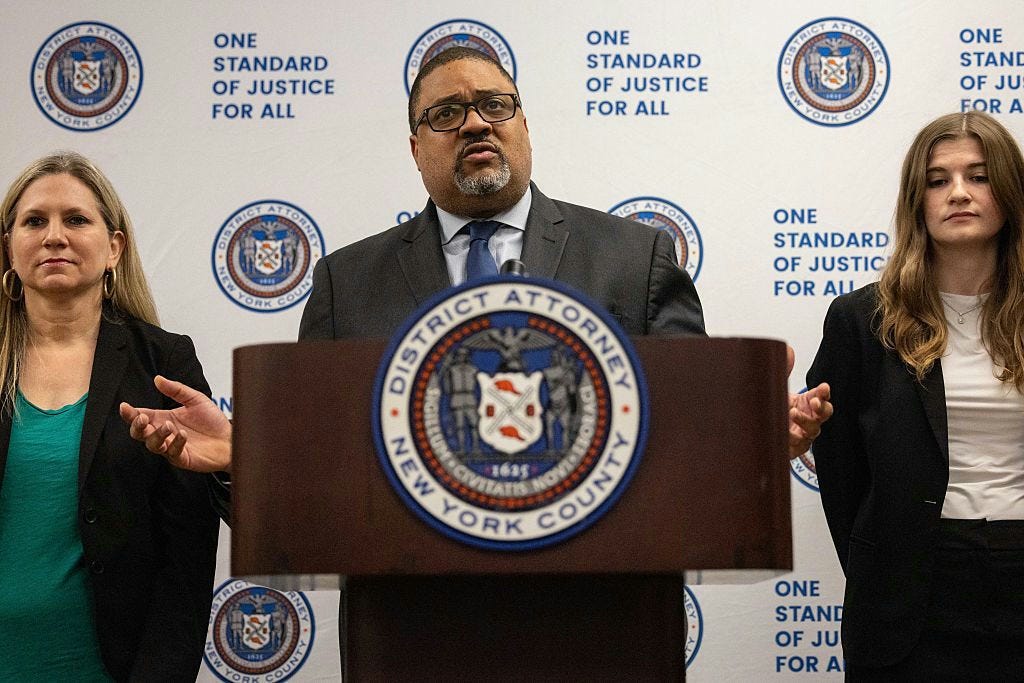
Earlier this month, Bragg issued a press release that proudly announced a 20-year prison sentence for a man convicted of a home invasion and robbery by gunpoint. It reflected a remarkable shift in perspective. Violent criminals were no longer viewed as victims themselves, or as by-products or casualties of oppressive social structures. The bad guys were bad guys again, and the victims were the center of Bragg’s attention.
So why is felony assault still so high?
Mamdani has been unusually aggressive in using his power to appoint judges to criminal courts in the city, an apparent effort to influence the criminal justice system.
One of the biggest challenges is that nearly half of the people arrested this year for felony assault on subways and buses have documented histories of mental illness, according to the police commissioner. And the intersection between criminal justice and mental health is famously dysfunctional. Psychiatric wards don’t have enough beds. A criminal judge can’t force someone to take medication. A defendant who agrees to inpatient treatment in a plea deal is free to leave at any time, and the facility has no obligation to report the departure to authorities.
What is a judge to do when punishment isn’t appropriate but treatment isn’t working? The lesser evil can be difficult to discern. And don’t forget that judges are still in the dark about cases that have been dismissed and sealed, for whatever the reason. It is a hard cycle to break. Of the 734 people arrested in the city’s subway system so far this year for felony assault and other major crimes, more than half had been arrested at least three times before, and nearly a third had been arrested at least three times this year. No one could plausibly claim that they didn’t see the fourth crime coming.
In another troubling development, Mamdani has been unusually aggressive in using his power to appoint judges to criminal courts in the city, an apparent effort to influence the criminal justice system. In January, he decided not to reappoint three judges despite an advisory committee’s recommendation. Some judges and legal experts saw the move as a sign of a new “political and ideological litmus test,” though city officials denied it.
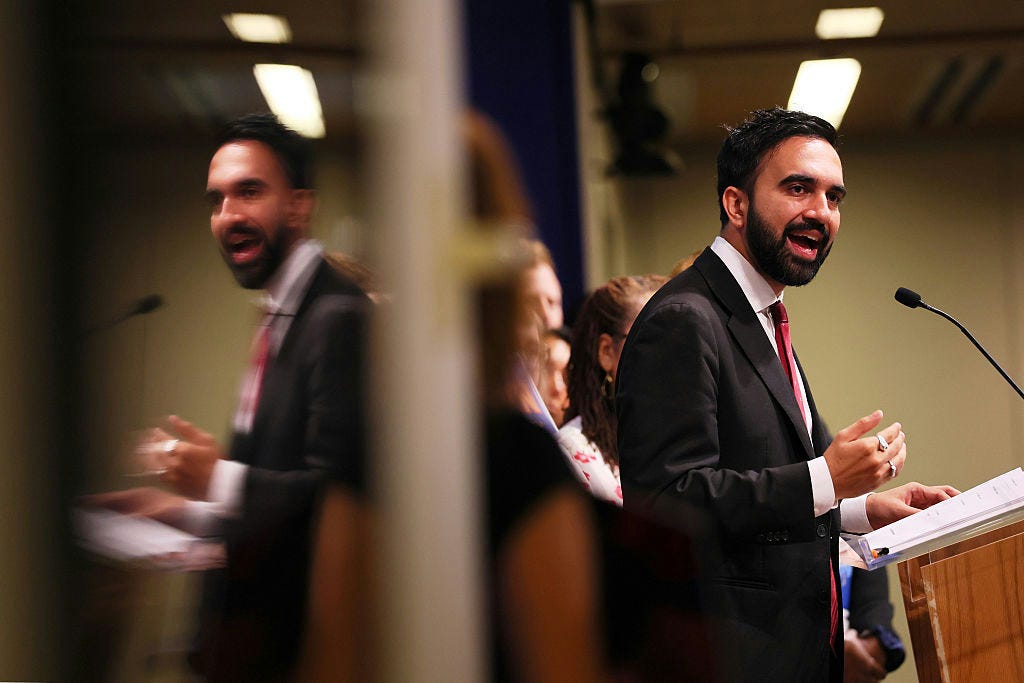
An executive order signed by Mamdani also gave the mayor’s top lawyer the power to “supervise and coordinate the activities of” the same advisory committee, which recommends judges, mostly for 10-year terms. In the past, the mayor’s chief counsel merely had the power to “maintain liaison” with the committee. Mamdani also put a friend in charge of the committee, who trumpeted his new position in a commercial for his personal-injury law firm, which has several ongoing lawsuits against the city.
In New York City’s massively complicated criminal justice system, where police, prosecutors, defense lawyers, judges, politicians, and the press play different roles, no single part can produce meaningful change unless most of the others are aligned. Without dramatic changes, felony assaults will likely continue creeping upward, just as they have almost every year since 2008.
That was the year when my cousin Brian brawled with the anti-exhaust activist in the Bronx. I called him to fact-check my memories, which weren’t always on point. As I recalled, the guy was trying to let the air out of the fire truck’s tires, not break the windows. Brian also told me the run was a wellness check, called in by a woman concerned she hadn’t heard from her 90-year-old mother in days. It was July, and the heat was sweltering. Firefighters had to force their way into the apartment, where they found the elderly woman unconscious. The place was like a sauna, but she was wearing a sweater. She was taken to the hospital and survived.
Brian described the man who attacked him as strongly built, white, and in his mid-20s. According to the man’s girlfriend, who appeared at the NYPD precinct after the arrest, he worked in finance. All in all, not the most sympathetic guy to appear in a Bronx court. Still, Brian mostly laughed when he remembered the story. The altercation had its upside for him: hours of overtime, a week of sick leave, and a medal. He also remembers recommending to a prosecutor that the man receive anger management.
I hadn’t talked to Brian for a while. I would have asked him what he thinks about the city now, whether he is hopeful or fearful for its future. I would also have asked how the fire department is doing under Mamdani. But I didn’t, because I knew Brian wouldn’t know. A few years ago, he moved to Arizona, and he hasn’t looked back.